Sendy had expanded into Nigeria and merchants were adopting the platform quickly for deliveries. But payments were a friction point. Card payments — the primary method available — had reliability issues that merchants knew from experience. Mobile money, unlike in Kenya, wasn't widely adopted in Nigeria for business transactions.
We partnered with OnePipe, a Nigerian fintech, to introduce bank transfers as an alternative payment method. The goal was simple: give merchants a payment option they already trusted.
What we learned from merchants
I led remote research with 8 Nigerian merchants — a new challenge, since I was designing from Nairobi for users in Lagos. Scheduling was unpredictable; merchants were often on the move or rescheduled last minute. My teammates in Nigeria were critical for recruiting participants and navigating the logistics.
The findings were clear. Most of our merchants were early-stage entrepreneurs who valued Sendy because it removed logistics complexity from their businesses. Every merchant preferred bank transfers over card payments — they'd been burned by failed card transactions before. Two specifically mentioned preferring PayPal deposits to debit cards because of higher success rates.
The signal was unambiguous: bank transfers weren't just a nice-to-have. They were what merchants expected.
Solution approach
The solution needed to cover three things: onboarding merchants to a virtual bank account (required by Nigerian banking regulations), verifying phone numbers for compliance, and designing the top-up and checkout flows.
We mapped user flows across all three areas and shared them with product squads, finance stakeholders, and OnePipe to align before building. This step caught problems early — unclear KYC requirements, the need for better onboarding guidance on how bank transfers work, and potential confirmation delays that could erode the trust we were trying to build.
We skipped wireframes — time was tight, and the flow discussions had already created enough shared understanding to move directly to UI design for mobile and web.
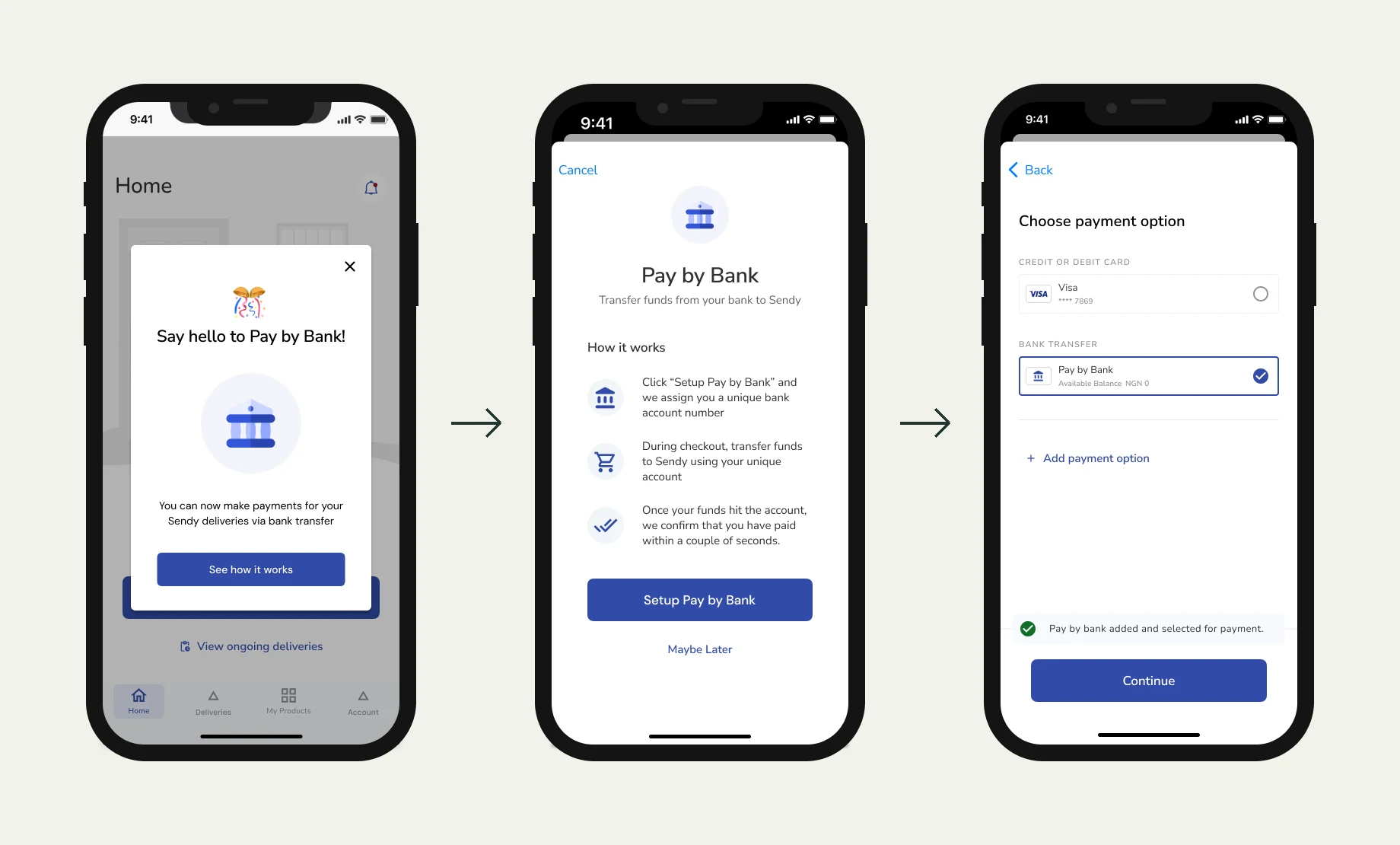
Setup in three screens: the announcement, how it works, and Pay by Bank added as a payment option.
What broke during beta
We ran a beta with five merchants. Two issues surfaced immediately.
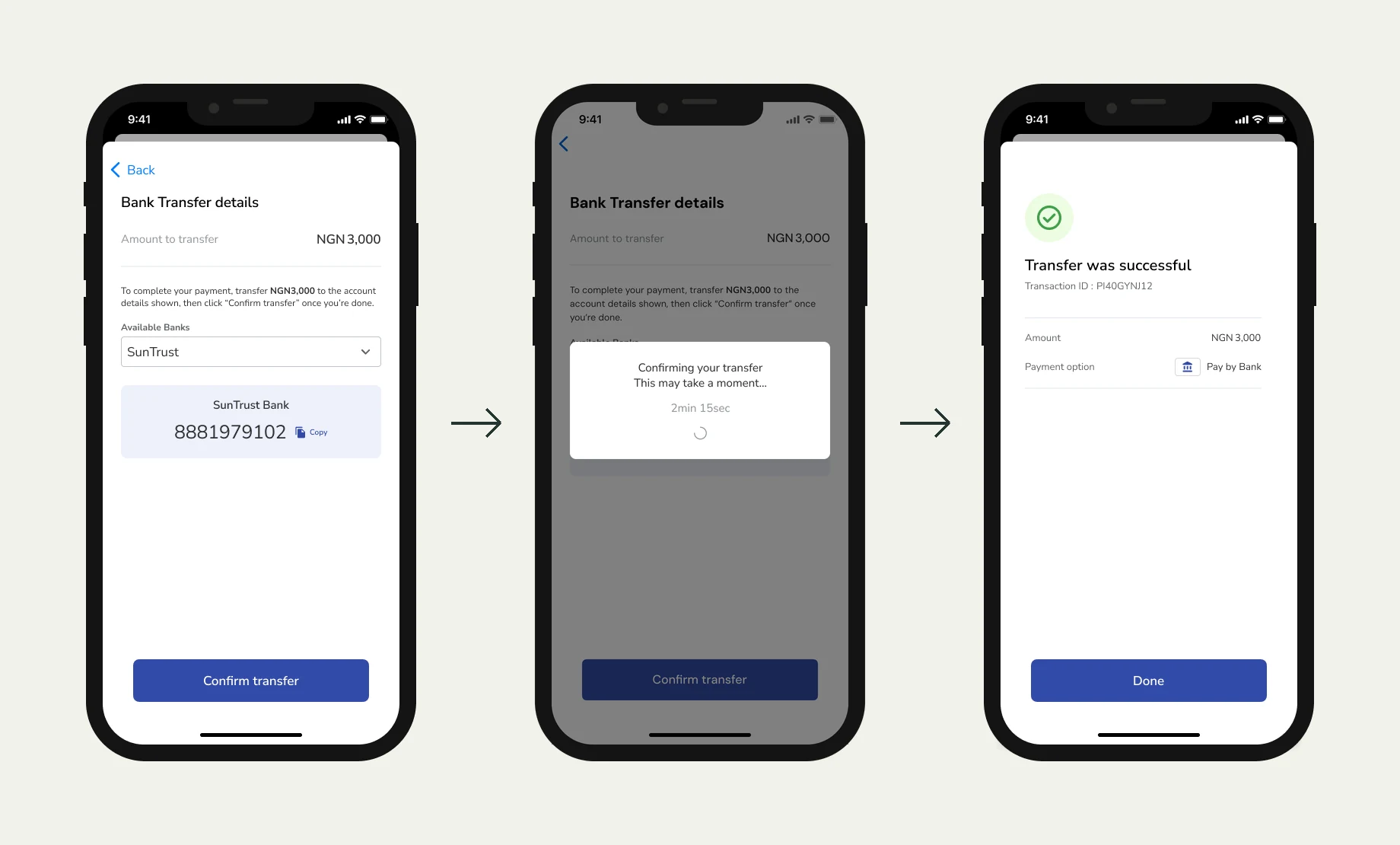
Confirmation delays. OnePipe had promised instant transfer confirmations. In practice, some took longer. Merchants sat staring at a screen not knowing if their payment went through — exactly the trust problem we were trying to solve. We added a countdown screen to set expectations and reduce anxiety.
Paying by transfer. The countdown in the middle was added after beta, when confirmations promised as instant took longer.
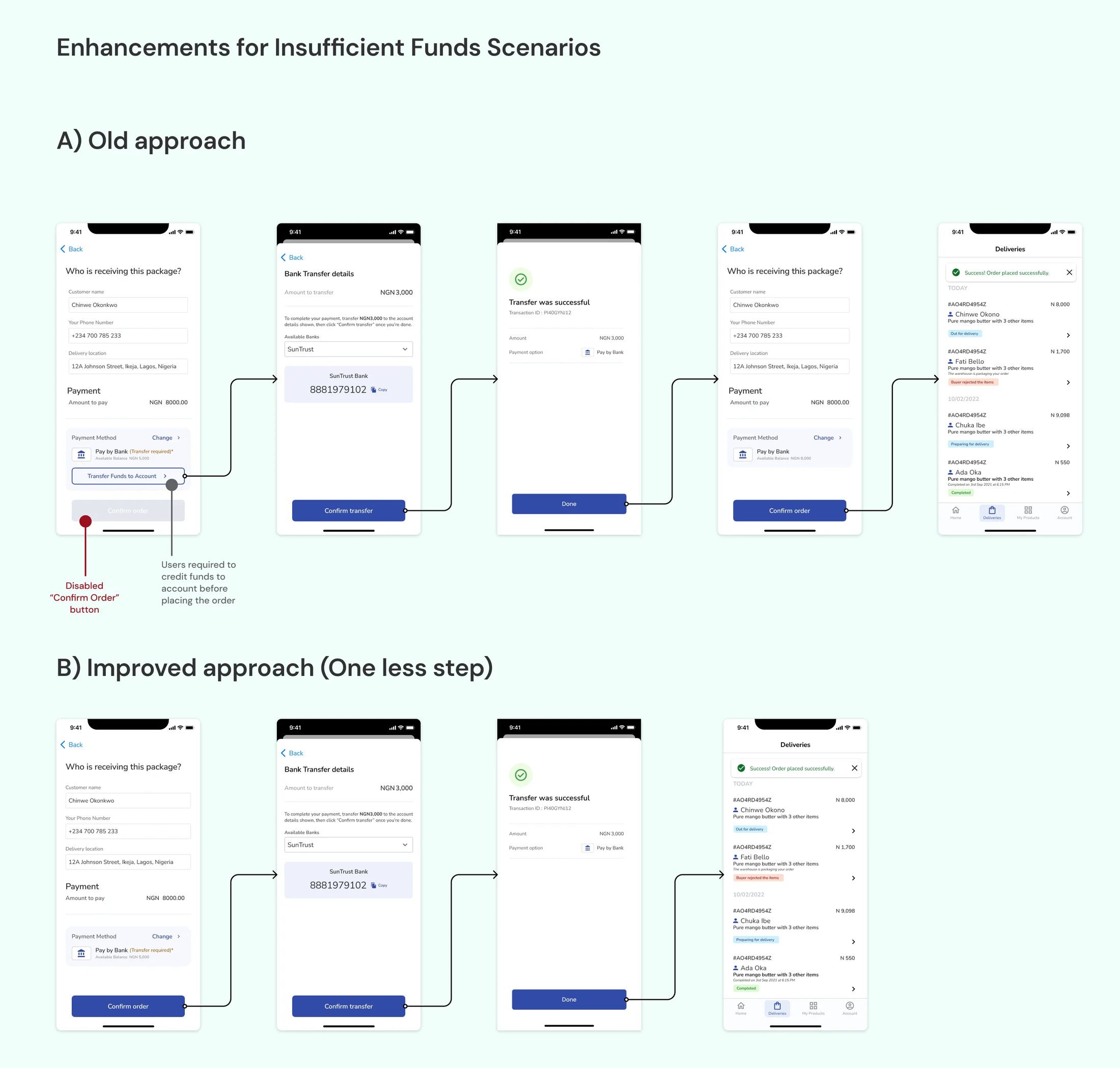
Unnecessary blocking on insufficient funds. The original flow prevented merchants from proceeding if their balance was too low. Beta testers found this frustrating and unnecessary — it added a step that didn't need to exist. We revised the flow so merchants could hit "Confirm Order" and only saw a prompt if funds were actually insufficient.
Before, a low balance disabled Confirm order and forced a top-up first. After, the merchant confirms and is asked to transfer only if funds are short.
Key decisions
Design for trust recovery, not just trust. The countdown timer wasn't in any spec. It came from watching real merchants lose confidence during a delay we hadn't anticipated. Designing for payment trust means designing for the moment things feel uncertain, not just the moment they succeed.
Remove friction that exists to protect the system, not the user. The insufficient funds block protected Sendy from failed transactions. But from the merchant's perspective, it was a wall. We shifted the check to a less disruptive moment without adding risk.
Outcome
90%
success rate
200+
merchants actively using within 30 days
Pay by Bank launched to Nigerian merchants after a two-week development sprint following the beta fixes. Within the first month, over 200 merchants were actively using bank transfers with a 90% success rate — significantly higher than the card payment experience it complemented.
Reflection
This was my first time leading design for a payment system in a market I wasn't physically in. The remote research was harder than expected — not because the insights were different, but because the logistics of reaching busy merchants in Lagos from Nairobi required more flexibility and more trust in teammates on the ground.
The biggest lesson: payment methods aren't features. They're trust infrastructure. Getting the happy path right is the easy part. The real design work is in what happens when confirmation is slow, funds are short, or the merchant's past experience with digital payments has been bad.